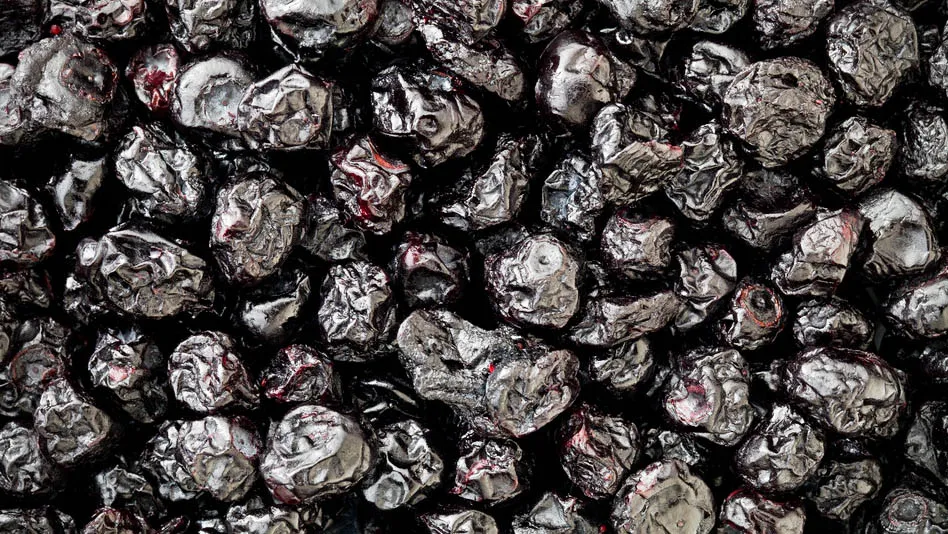
Blueberries can be a welcome addition to many backcountry breakfasts and snacks. When dried, they pack a lot of flavor for the weight. Here's my technique for drying blueberries, including a quick "check" to speed up dehydration and rehydration.
Dehydrated blueberries make a great highlight ingredient to doctor granola, trail mix, pancake batter, and more when in the backcountry. Blueberries dry well when both fresh or frozen. If you grow your own, it works well to selectively pick and freeze the berries as they ripen, and then dehydrate them all at once when you have enough.
While pretreatment isn’t mandatory, fresh blueberries will dehydrate and re-hydrate more quickly and with a better texture if the berries are “checked.” This is accomplished by dipping them in boiling water for about thirty seconds – just until the outer skin cracks.
How to dehydrate blueberries
- Rinse the fresh berries in cold water, sifting through them to look for any remaining stem pieces or leaves.
- For the best results, you may want to measure the weight of the fresh berries so you can properly determine when the berries have adequately dried.
- Add the berries to a blanching basket or strainer, and dip this into boiling water for 30 seconds to check the berries. After 30 seconds, immediately plunge the berries into cold water. This rapid change in pressure will crack the outer skin of the berry, allowing dehydration to occur more rapidly.
- Line plastic drying trays with food-safe nylon or polypropylene mesh to stop the berries from falling through the slats, and also to prevent sticking.
- Add the berries to the mesh-lined trays, a single layer thick.
- Dehydrate at around 130° F for 7-10 hours.
- The berries will be finished when they are about 1/5 of their fresh weight. The texture should be dry, chewy to crunchy, and very dark in color.
- For best results, store the blueberries in vacuum packaging or freezer bags, and keep them in the refrigerator until you plan to eat them. As with all dried fruits and vegetables, allow the berries to completely cool before packaging.
Pretreatment techniques
Most fruits keep their color and last longer when pretreated before drying. These guides cover each method:
- How to steam blanch vegetables
- How to syrup blanch fruit
- Sulfuring and sulfite dips for preserving dried fruits
- Pre-treating fruit with honey as a preservative before drying
- Pretreating fruits for drying with fruit juice dip as a sulfite alternative
- Using ascorbic acid as a sulfite alternative to prevent fruit browning
New to dehydrating? Start with Food dehydrating 101.